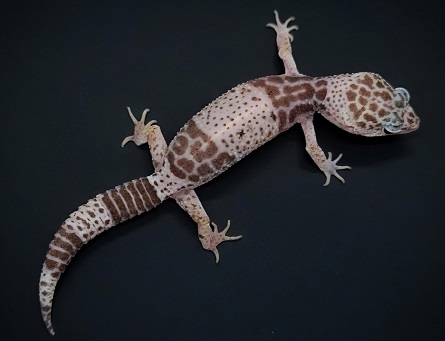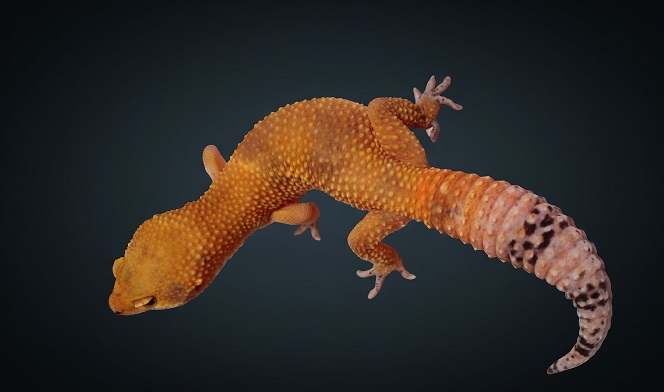
Leopard Gecko Care Sheet
Eublepharis macularius — Western Leopard GeckoOne of the most popular reptiles in the hobby — hardy, handleable, and available in hundreds of morphs. Native to the arid grasslands and rocky deserts of Pakistan, Afghanistan, and northwest India. Leopard geckos are ground-dwelling, nocturnal insectivores and one of the best beginner reptiles available.
🏠 Housing & Enclosure
Leopard geckos are terrestrial — they live on and under the ground, not in trees. Enclosure footprint (floor space) matters far more than height. A long, low enclosure is always better than a tall one.
Enclosure Size
- Juvenile (under 6 months): 10–20 gallon, or a 20L (30"×12"). A smaller space makes prey easier to catch and reduces stress.
- Adult: 20 gallon minimum (30"×12"×12"). A 40 gallon breeder (36"×18") is strongly preferred and gives the gecko room to thermoregulate properly.
- Giant morphs: 40 gallon minimum — these animals are significantly larger and need more floor space.
- Do not house multiple males together — they will fight. A male and female should only be paired intentionally for breeding.
- Two females can often be housed together successfully, but monitor closely for competition over food and hides.
Enclosure Type
- Glass tank (aquarium style) — the most common and widely available option. Easy to find, good visibility, retains heat well.
- PVC or plastic tub enclosures — excellent for maintaining heat and humidity, preferred by many breeders. Less visually appealing but highly functional.
- Screen top — necessary for ventilation but can make maintaining humidity in the moist hide harder in dry climates. A partial cover can help.
- Avoid front-opening vivariums designed for arboreal species — the large vertical space is wasted and escape risk can be higher.
🌡️ Temperature & Heating
Leopard geckos are ectotherms — they rely entirely on external heat sources to regulate their body temperature. A proper thermal gradient from one side of the enclosure to the other is essential. Without it, a gecko cannot digest food, fight infection, or function normally.
Heating Methods
- Under Tank Heater (UTH) — the traditional method and still widely used. Placed under one end of the tank, covers roughly 1/3 of the floor space. Must be used with a thermostat — unregulated UTHs can reach dangerous temperatures and cause thermal burns through the belly.
- Radiant heat panels — mounted to the inside of a lid or PVC top. Even, gentle belly heat without the risk of substrate scorching. Excellent with tubs.
- Deep heat projector (DHP) — a bulb-style heater that emits non-visible infrared wavelengths that penetrate tissue and warm from within. Excellent for overall health — mimics solar heating more closely than surface-only methods.
- Ceramic heat emitters (CHE) — emit heat without light, useful for maintaining overnight temps. Less ideal as a primary heat source for leos since they don't produce belly heat.
- Heat tape — used by breeders for rack systems. Effective and efficient but requires careful thermostat control and is not recommended for beginners.
Nighttime Temperatures
Leopard geckos are from arid regions where temperatures can drop significantly at night. They tolerate nighttime drops to 65–68°F without issue and actually benefit from a natural temperature cycle. As long as daytime temperatures are restored each morning, brief nighttime drops are not harmful and are considered natural.
Do not heat the enclosure 24/7 to daytime temperatures — a natural drop at night supports healthy metabolism and circadian rhythm.
💡 Lighting & UVB
Leopard geckos are crepuscular to nocturnal — most active at dusk and dawn. They evolved to avoid peak daylight hours. This led to the long-held belief that they need no UVB at all.
- UVB (optional but recommended): A low-output T5 HO 5.0 or 6% UVB bulb, positioned 12–16 inches above the gecko, on a 10–12 hour light cycle. Always provide a shaded area so the gecko can choose to avoid UVB exposure.
- Photoperiod: Maintain a consistent 10–12 hour light/dark cycle regardless of whether you use UVB. This supports natural behavior and circadian rhythm.
- No basking light needed: Unlike bearded dragons or iguanas, leopard geckos do not bask under radiant heat from above. All heat should come from below (UTH, heat tape) or from a DHP.
- Night: Total darkness is preferred. Avoid colored "night" bulbs — geckos can see red and blue light and nighttime light disrupts their natural activity patterns.
🪨 Substrate
Substrate choice is one of the most debated topics in leopard gecko keeping. The primary concerns are impaction risk, hygiene, humidity management, and naturalistic enrichment.
✅ Recommended Substrates
- Paper towel or reptile carpet — easiest to clean, zero impaction risk, ideal for juveniles, sick animals, and new keepers getting started.
- Tile (slate or ceramic) — extremely easy to clean, retains heat well from UTH, naturally wears down nails. Cold to the touch so ensure proper heating underneath.
- Topsoil / excavator clay mix — allows natural burrowing and maintains humidity in moist hide areas. Best for experienced keepers who monitor humidity carefully.
- Bioactive with leaf litter — naturalistic and enriching for the animal. Requires a proper drainage layer, microfauna (isopods and springtails), and more maintenance knowledge.
❌ Substrates to Avoid
- Loose calcium sand — marketed as "safe" but carries real impaction risk, especially in juveniles and animals with nutritional deficiencies. Avoid entirely.
- Play sand — same impaction risk as calcium sand. Juveniles and sick geckos should never be kept on any loose sand.
- Wood shavings / cedar — cedar is toxic to reptiles. Pine is also problematic. All wood shavings carry respiratory and toxicity risks.
- Coconut fiber alone — too high in humidity for leopard geckos when used as a full substrate. Can be used in the moist hide only.
- Gravel — impaction risk, hard on foot pads, and difficult to clean thoroughly.
🏚️ Hides & Enrichment
Leopard geckos are secretive animals that spend the majority of their time hidden. Providing adequate hides is not optional — a gecko without proper hides will be chronically stressed, which suppresses immune function and leads to long-term health problems.
The Three-Hide Setup
- Hot hide (warm side): Placed directly over the heat source so the gecko can thermoregulate while remaining concealed. This is where the gecko will spend most of its time digesting.
- Cool hide (cool side): A second hide on the cool end of the enclosure. Allows the gecko to hide when it wants to cool down without being exposed in open space.
- Moist hide (warm to middle area): A hide with damp substrate (coconut fiber, sphagnum moss) inside. Critical for proper shedding — leopard geckos need access to elevated humidity during a shed. Without a moist hide, retained shed (dysecdysis) is extremely common and can cause toe loss.
All hides should be snug-fitting — a hide that is too large provides no security. The gecko should barely be able to fit inside and should feel the walls touching its body. This is what makes it feel safe.
- Decorations and clutter: Rocks, cork bark, fake plants, and other hides all add enrichment and make the gecko feel more secure. More cover = lower stress levels.
- Water dish: A shallow dish of fresh water should always be available. Clean and refill every 1–2 days. Ensure it is shallow enough that a gecko cannot drown.
- Climbing: While not arboreal, leopard geckos do explore and appreciate low-level rocks and cork bark to climb over and around.
💧 Humidity
Leopard geckos come from arid environments and do not tolerate persistently high humidity. However, they require a reliably moist microclimate for shedding. The solution is a dedicated moist hide — not a humid enclosure overall.
- Enclosure ambient humidity: 30–40%. Higher than 50% for extended periods increases risk of respiratory infections and bacterial issues.
- Moist hide: 70–80% humidity inside the hide. Achieved with damp (not wet) coconut fiber or sphagnum moss. The substrate inside should feel like a wrung-out sponge — moist but not dripping.
- Spray the moist hide only — not the entire enclosure. Re-moisten every 3–5 days or as needed based on how quickly it dries out in your climate.
🦗 Feeding & Nutrition
Leopard geckos are strict insectivores — they do not eat plant matter, fruit, or vegetables. All nutrition comes from live insects. The quality and variety of insects fed directly determines the long-term health of the animal.
| Feeder Insect | Use Frequency | Notes |
|---|---|---|
| Dubia Roaches | Staple — feed freely | Excellent nutritional profile. High protein, low fat, easy to gut-load. Best all-around staple feeder. |
| Crickets | Staple — feed freely | Widely available and accepted eagerly. Gut-load 24–48 hours before feeding. Dispose of uneaten crickets promptly — they can bite and stress the gecko. |
| Black Soldier Fly Larvae (BSFL) | Staple — feed freely | Outstanding calcium-to-phosphorus ratio. Reduces need for calcium dusting. Excellent for juveniles and breeding females. |
| Mealworms | Occasional treat | Higher in fat — acceptable as a treat or for picky feeders. Do not use as a sole staple. Adult mealworms (superworms) for large adults. |
| Superworms | Occasional — adults only | High fat content. Use sparingly. Good for weight gain in underweight adults. Do not feed to juveniles. |
| Waxworms | Rare treat only | Very high fat — highly palatable and addictive. Limit to 1–2 per week maximum. Overfeeding causes obesity and refusal of other feeders. |
| Hornworms | Occasional | High moisture content, low fat. Good for hydration. Excellent for picky eaters or sick animals needing encouragement to eat. |
| Silkworms | Occasional | Good nutritional profile, soft-bodied. Accepted well by most geckos. Harder to source than other feeders. |
Feeding Schedule
- Hatchlings (0–4 months): Feed every day. Offer 2–5 small crickets or appropriately sized dubias per feeding. Prey should never be wider than the space between the gecko's eyes.
- Juveniles (4–12 months): Feed every other day. 4–8 feeders per session.
- Adults (12+ months): Feed every 2–3 days. 6–10 feeders per session. Adjust based on body condition — tail thickness is the best indicator of overall health and fat reserves.
- Gravid females and post-lay females: Feed more frequently and ensure calcium is always available.
Supplementation
- Calcium without D3: Dust feeders at every feeding for juveniles, every other feeding for adults. A small dish of pure calcium powder can be left in the enclosure at all times — geckos will self-regulate.
- Calcium with D3: Use 2–4 times per month. D3 is fat-soluble and can accumulate — do not use at every feeding.
- Multivitamin: Dust feeders 1–2 times per month. Provides trace minerals and vitamins not covered by calcium supplementation alone.
- Gut-loading feeders: Feed your insects a nutritious diet for 24–48 hours before offering them to your gecko. Carrots, leafy greens, sweet potato, and commercial gut-load are all appropriate.
🔄 Shedding (Ecdysis)
Leopard geckos shed their entire skin in one piece, typically every 4–6 weeks for juveniles and every 6–8 weeks for adults. Unlike some reptiles, leopard geckos eat their shed skin — this is normal and beneficial.
- Signs of an approaching shed: Skin appears dull, milky, or grey. Eyes may appear cloudy or blue-tinted. The gecko may go off food or become less active 2–5 days before shedding.
- During a shed: Do not disturb the gecko. Do not attempt to help unless the shed is clearly stuck after 24 hours. Ensure the moist hide is damp and accessible.
- Retained shed (dysecdysis): Shed that does not come off completely. Most commonly affects the toes, tail tip, and eye caps. Soak the gecko in shallow warm water for 15–20 minutes and gently roll retained shed with a damp Q-tip. Eye caps should only be removed by a veterinarian.
- Prevention: A properly maintained moist hide prevents retained shed in the vast majority of cases. If retained shed is recurring, reassess moist hide humidity levels.
🏥 Common Health Issues
🤲 Handling & Temperament
Leopard geckos are generally one of the most handleable reptile species available and most individuals become calm and tolerant with regular, positive interaction. They rarely bite and when they do, it is a soft pinch that causes no real injury.
- New gecko: Allow 1–2 weeks to settle in before attempting any handling. During this time, keep disturbance minimal and let the gecko establish its territory and hiding spots.
- First sessions: Start with 5–10 minute handling sessions. Support the full body — never grip the tail. Sit close to the ground in case the gecko drops.
- Building duration: Gradually extend sessions to 15–30 minutes as the gecko becomes comfortable. Most well-socialized adults tolerate 30+ minute handling sessions.
- Tail autotomy: Leopard geckos can voluntarily drop their tail as a defense mechanism. The tail will regenerate but the new tail is a different shape (rounded, with no original pattern). Avoid grabbing the tail or creating situations where the gecko feels threatened enough to drop it.
- Avoid handling: For 48 hours after feeding (disrupts digestion), during shedding, when the gecko appears ill or stressed, immediately after bringing a new gecko home.
🎨 Common Morphs
Leopard geckos have one of the most developed morph markets in the reptile hobby — hundreds of named morphs exist covering recessive, co-dominant, and polygenic traits.
🔵 Recessive Morphs
🟢 Co-Dominant / Polygenic Morphs
🟡 Popular Combinations
🥚 Breeding Basics
Leopard geckos are seasonal breeders — natural breeding season occurs in spring and early summer, often following a winter cooling period (brumation). Temperature-dependent sex determination (TSD) means incubation temperature determines the sex of hatchlings.
- Sexual maturity: Males at 6–8 months (45–50g minimum). Females should be at least 18 months and 45–50g before any breeding attempt — breeding underweight or immature females causes serious health risks.
- Brumation (optional but beneficial): Gradually cool the enclosure to 60–68°F over 2–3 weeks in November–December, hold for 6–8 weeks, then gradually warm back up. This stimulates breeding behavior in spring.
- Egg incubation: Eggs should be placed in a deli cup with moist vermiculite or perlite, half-buried, and incubated at a stable temperature. Do not rotate or flip eggs.
- TSD temperatures: 80–82°F produces mostly females · 86–88°F produces mixed sexes · 88–90°F produces mostly males · Above 90°F risks birth defects.
- Incubation duration: 45–60 days at optimal temperatures. Eggs incubated cooler will take longer.
- Laying box: Provide a box of moist substrate (coconut fiber, organic topsoil) on the warm side for females to lay. A female unable to find a suitable laying site may become egg-bound.
🌍 Related Eublepharis Species
The genus Eublepharis contains several closely related species — all share the characteristic eyelids (true geckos in the sense of having movable eyelids, unlike most gecko species) but differ in size, coloration, native range, and care requirements.
Eublepharis hardwickii is the largest species in the genus, reaching up to 14–16 inches in total length — significantly larger than the common leopard gecko. Native to the forest floors and rocky outcroppings of eastern India and Bangladesh, this species inhabits areas with higher humidity and more moderate temperatures than E. macularius.
- Size: 12–16 inches as adults — considerably larger than macularius. Plan enclosures accordingly.
- Enclosure: 40–60 gallon minimum for adults. Larger floor footprint is more important than height.
- Temperature: Warm side 80–85°F · Hot spot 85–88°F · Cool side 70–75°F. Slightly cooler than macularius is tolerated and appropriate.
- Humidity: 50–60% ambient — notably higher than common leopard geckos. More natural to their forest floor habitat. Moist hide still recommended.
- Diet: Same insectivore diet as macularius — larger prey items appropriate for their size. Dubia roaches, large crickets, superworms for adults.
- Temperament: Generally more defensive than macularius and may take longer to acclimate to handling. Individual variation is significant.
- Availability: Rare in the hobby — wild-caught imports are occasionally available. Captive-bred specimens are uncommon but exist. Research thoroughly before acquiring.
- Note: Not a beginner species. Their higher humidity requirements, larger size, and less predictable temperament make them more suitable for experienced keepers.
Eublepharis fuscus is a smaller, more slender species native to the western coast of India and parts of Pakistan. They inhabit drier, more coastal environments than macularius — rocky outcroppings, scrub forest, and coastal lowlands. Less studied than the common leopard gecko and rarely seen in captivity, but captive-bred specimens do exist among dedicated collectors.
- Size: 6–8 inches as adults — smaller and more slender in build than macularius.
- Enclosure: 20 gallon suitable for adults given their smaller size. Same terrestrial setup as macularius.
- Temperature: Warm side 82–86°F · Hot spot 88–90°F · Cool side 72–76°F. Similar to macularius, slightly warmer overall reflecting their coastal origin.
- Humidity: 40–55% — slightly higher than macularius but lower than hardwickii. Moist hide essential.
- Diet: Same insectivore diet as macularius — appropriately sized prey. Smaller feeders appropriate given their smaller adult size.
- Temperament: Reported to be more flighty and alert than macularius — acclimate slowly and handle with care, particularly early on.
- Availability: Rare in captivity. Occasionally imported as wild-caught; captive breeding programs are small and limited to specialist collectors.