🐠 Aquarium & Fish Resources
Oscar Fish Morphs & Species Guide
Complete guide to Astronotus ocellatus — true color morphs, related species, and why "berry" dyed Oscars are not real morphs and should not be purchased.
🚫 Before We Start — Let's Address the Fake Morphs
Any Oscar currently on the market with "berry" in the name — blueberry oscar, strawberry oscar, etc. — is a dyed fish. These are not color morphs, not line-bred varieties, and not natural. They are normal oscars that have been injected with dye or had color artificially introduced through other methods.
Dyed fish do not keep their color. The artificial color fades over months, often unevenly, and the fish underneath is usually a plain wild-type or tiger oscar. Beyond being a financial waste, the dyeing process causes significant stress and physical harm — many do not survive it, and those that do typically have shortened lifespans and increased disease susceptibility.
The only way to reduce how many dyed fish are produced is to stop buying them. Every purchase funds the next batch.
🎨 True Color Morphs of Astronotus ocellatus
Common / Wild Type Oscar
Also called the black oscar or normal oscar. The base form of the species — dark body with irregular orange-edged markings and the characteristic ocellus (eye spot) at the base of the tail. The template from which all other morphs were developed.
CommonWild type
Tiger Oscar
One of the most recognizable and popular morphs. Characterized by bold orange and black irregular banding or marbling across the body, resembling a tiger's patterning. Color intensity varies considerably between individuals and bloodlines.
Common
Red Tiger Oscar
A variant of the tiger pattern with a heavier concentration of red coloration in place of orange. The pattern remains similar to the standard tiger but with a warmer, deeper red tone. One of the most commonly available morphs in the trade today.
Common
Red Oscar
A predominantly red-bodied oscar with reduced or minimal black patterning. Coloration tends to be more even and solid than the tiger variants. The best examples show deep, consistent red across the majority of the body.
Common
Albino Oscar
The base albino form — lacking melanin, resulting in a pale cream to white body with pink or red eyes. Pattern markings are still present but appear as yellow or pale orange against the white base. Healthy albinos are fully viable and long-lived when kept correctly.
CommonAlbino
Albino Red Oscar
Also known as "bloody albino" — an albino oscar carrying the red gene, producing pink, red, or orange coloration across the body. Color expression varies significantly. Among the most visually striking Oscar morphs available.
CommonAlbino
Albino Pink Oscar
A line-bred form of the albino red developed to emphasize pale pink coloration rather than deeper red or orange tones. Considered a refinement of the albino red line rather than a genetically distinct morph. Quality varies significantly between breeders.
AlbinoLine bred
Sunshine Albino Oscar
A striking albino variant with strong yellow coloration, distinct from the pale cream of the standard albino. The yellow pigment is genuine and stable — not dyed. Believed to be a selectively developed form, though its exact genetic origin is not fully documented.
AlbinoOrigin debated
Patternless Green Oscar
A reduced-pattern or patternless morph with an overall greenish-grey body and minimal or absent orange markings. The green appearance comes from iridescent scales rather than true green pigment. Not commonly seen in the mainstream trade.
Less common
Gold Oscar
A golden-bodied oscar with reduced dark patterning and an overall warm yellow to gold appearance. Not to be confused with albino variants — gold oscars retain dark eyes. Kept in separate bloodlines by dedicated breeders but not widely seen in general trade.
Less common
Half Black Oscar
A selectively developed morph with a dramatically split coloration — solid jet black on one portion of the body transitioning into normal tiger or orange patterning. Developed by Herb Fogel. Believed to have largely disappeared from active breeding programs.
Likely goneLine bred
Purple Oscar
A genuinely unusual morph with an overall bluish-purple iridescence. True purples are distinct from blue/slate forms and are exceptionally rare — believed to have largely or entirely disappeared from the captive hobby. Documented examples exist but locating verified specimens today is extremely difficult.
Believed goneExtremely rare
Blue / Slate Oscar
Also called the slate oscar — an offshoot of the purple lineage with a cooler, bluer overall tone. The blue coloration comes from iridescent scale structure rather than true blue pigment. Rare but reportedly still in existence in some private collections.
RarePurple lineage
Pied / Piebald Oscar
An extremely rare natural variant with irregular patches of white or pale coloration alongside normal pigmentation. Only a small number of wild-collected piebald specimens have ever been documented. Not known to be established in captive breeding.
Wild collected onlyNot in captive trade
White / High White / Ghost Oscar
Sold under various names including ghost oscar and high white oscar. Despite the marketing names, these consistently develop into reduced-pattern albinos as they mature. They are not a separate genetic form — the pale appearance reflects low melanin expression.
Albino variantMarketing names vary
Lemon Oscar
Believed to be a line-bred gold albino selectively developed to retain strong, stable yellow coloration rather than the paler cream of standard albinos. The lemon coloration is genuine — not dyed — and persists into adulthood. Origin information is limited.
Line bredAlbino lineageOrigin uncertain
⚠️ A Note on New Names That Keep Appearing
From time to time, new and exciting-sounding oscar names appear in the trade — often accompanied by elevated prices and bold claims about rarity. The vast majority of these are sales pitches or rebranding exercises for morphs that have existed in the hobby for decades under different names. If you encounter an oscar variety you don't recognize, the most likely explanation is either a renamed existing morph, a line-bred refinement of an established form, or in the worst case, a dyed fish. Research before you pay a premium.
🔬 Other Species in the Astronotus Genus
Alongside Astronotus ocellatus — the common oscar — there are reportedly two or more additional species within the genus, though their taxonomy has been debated and is not fully resolved. These are very rarely seen in the trade.
Striped Oscar / Orbiculatus
Astronotus orbiculatus (syn. Astronotus obicularis — taxonomic status contested)
A separate species characterized by distinct striped or banded patterning compared to the blotched appearance of A. ocellatus. The taxonomic validity of this species has been debated and its exact relationship to A. ocellatus is not universally agreed upon. Rarely encountered in the hobby.
AKA Bumble Bee Oscar
AKA Striped Oscar
Taxonomy contested
Rarely available
Striped / Black Oscar
Astronotus crassipinnis
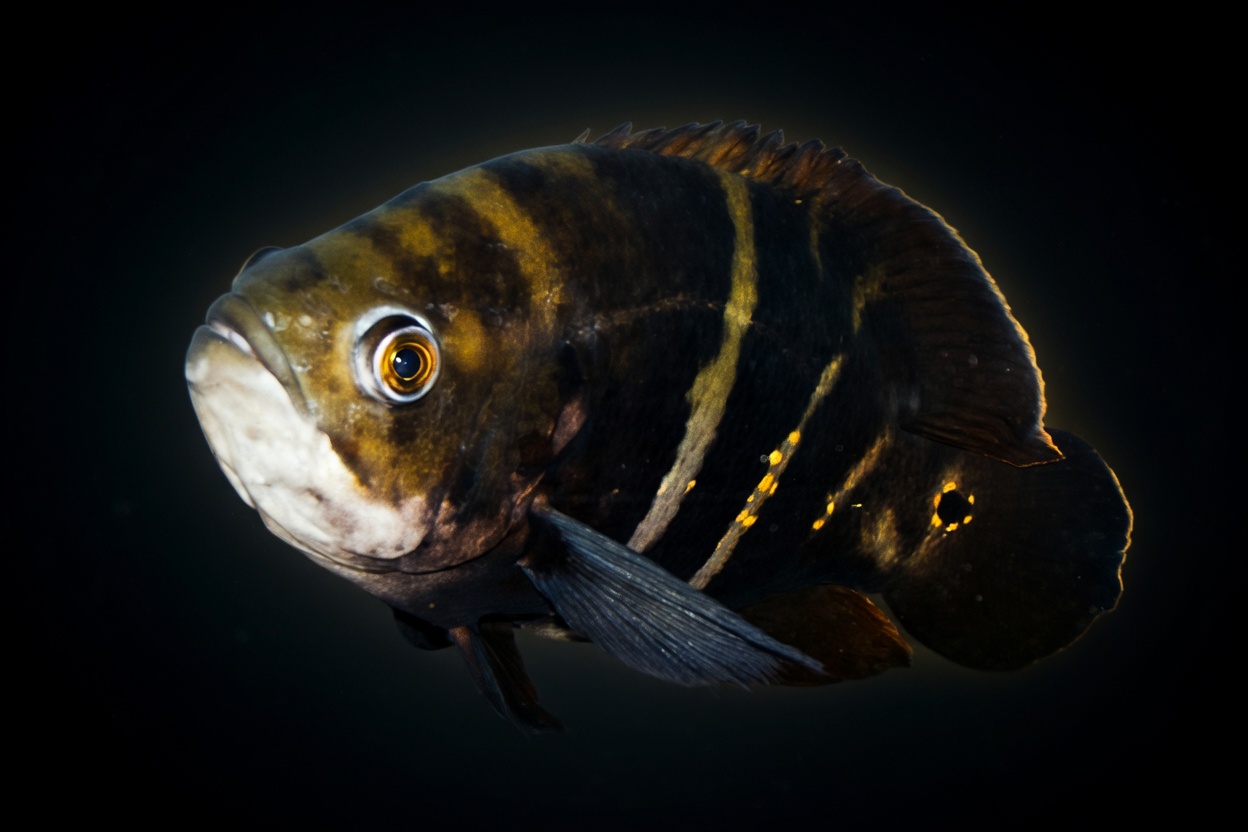
A recognized species distinct from A. ocellatus, sometimes referred to as the striped oscar or black oscar in the trade — which causes confusion given how loosely those names are applied to common oscars. Not commonly bred in captivity but does appear occasionally as imported fish. Worth looking out for if you're interested in the genus beyond the standard hobby forms.
★ The header photo on this page is a specimen of A. crassipinnis from Bolivia — originally collected by Dr. Wayne S. Leibel and held at Jeff Rapps' facility before being acquired by the author in the late 1990s.
AKA Striped Oscar
AKA Black Oscar
Occasional import only
Venezuela Oscar
Astronotus sp. "Venezuela"
An undescribed or informally recognized form collected from Venezuelan waterways. Whether this represents a distinct species, a regional variant of A. ocellatus, or something else entirely has not been formally resolved. Known primarily through occasional wild-collected specimens and hobbyist records rather than formal scientific description.
Undescribed / informal
Extremely rare
Note: This page is a living document and will continue to be updated as new information becomes available or as verified additions to the hobby emerge. If you have documented information or photographs of any of the rarer morphs or species listed here — particularly the half black, purple, or piebald forms — feel free to share via the community discussions.