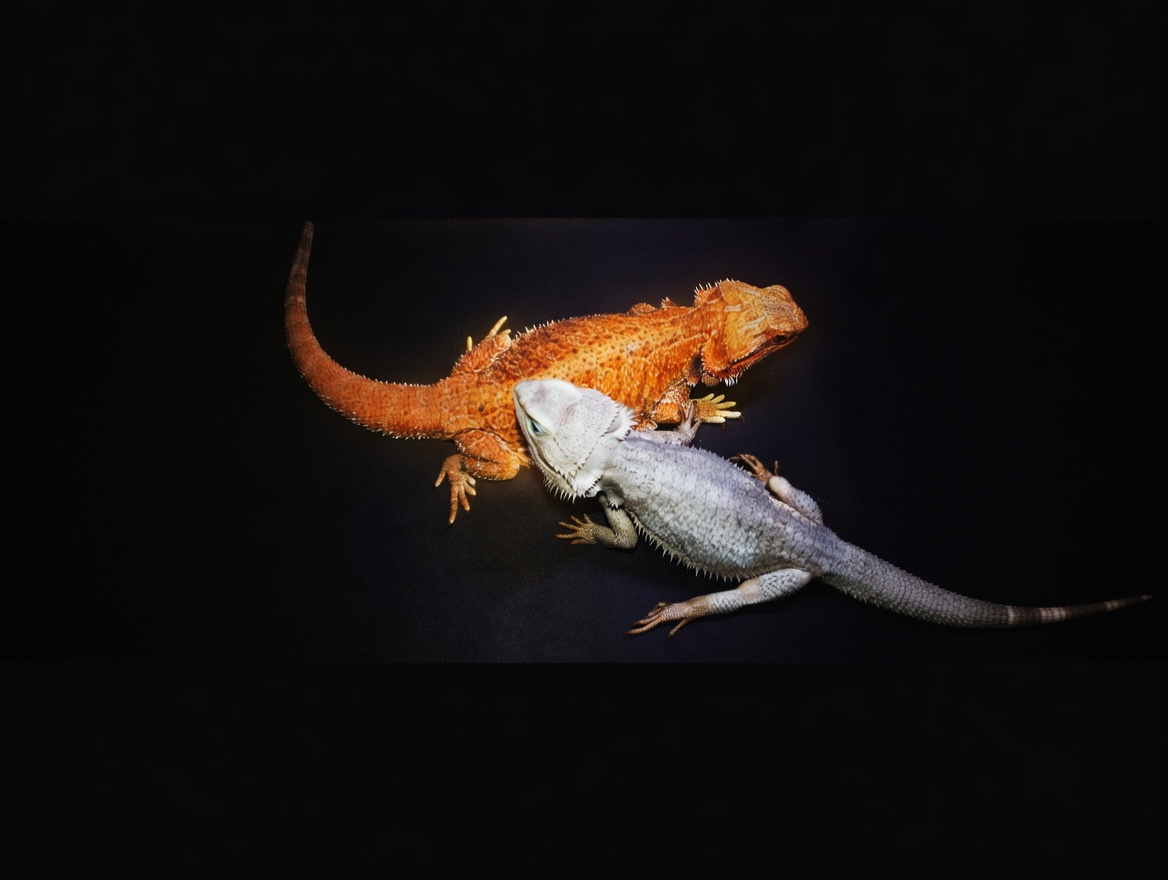
🦎 Reptile Care Sheet
Bearded Dragon Care Sheet
Pogona vitticeps — Central / Inland Bearded Dragon
One of the most popular pet reptiles in the world — intelligent, social, and genuinely interactive. Native to the arid and semi-arid regions of central Australia, bearded dragons are diurnal baskers that require significant UVB lighting and a wide thermal gradient to thrive in captivity.
📏
Adult Size
18–24 inches
Snout to tail tip
⚖️
Adult Weight
300–500g
Males typically heavier
⏳
Lifespan
10–15 years
Up to 18 in excellent care
🌡️
Basking Spot
100–110°F
Surface temp under basking bulb
❄️
Cool Side
80–85°F
Ambient warm side air
🌙
Nighttime
65–75°F
No light needed at night
💧
Humidity
30–40%
Low — arid species
🏠
Min Enclosure
4×2×2 ft
120 gal / 4×2 PVC for adults
☀️
UVB Required
Yes — essential
T5 HO 10–12% or equivalent
🥗
Diet
Omnivore
Insects + vegetables + greens
✓ Beginner-friendly: Bearded dragons are one of the most recommended first reptiles — they are diurnal (active during the day), tolerate handling extremely well, eat a wide variety of foods, and tend to be calm and interactive. Their care requirements are well documented and they are widely available captive bred.
🏠 Housing & Enclosure
Bearded dragons are active, semi-arboreal lizards that need floor space for thermoregulation and some vertical space for climbing and basking. A long, low-to-medium enclosure is ideal.
Enclosure Size
- Hatchlings (0–3 months): 20 gallon (30"×12") is acceptable to start. A smaller space makes prey easier to catch and reduces stress in tiny juveniles.
- Juveniles (3–12 months): 40–75 gallon or equivalent PVC enclosure. Upgrade as the animal grows — a dragon that is cramped will be stressed and may not feed well.
- Adults (12+ months): 4×2×2 feet (120 gallon equivalent) is the accepted minimum. A 4×2×2 PVC enclosure or 120 gallon aquarium is the standard. Many keepers recommend 5×2×2 for adult males especially.
- Never house two bearded dragons together — they are solitary and will compete aggressively for basking spots, food, and territory, causing chronic stress and injury.
Enclosure Type
- PVC or wood enclosures — preferred by most experienced keepers. Retain heat efficiently, easy to mount lighting, and readily available in the correct dimensions.
- Glass aquariums — widely available and acceptable, but glass loses heat quickly and can make maintaining temperatures more difficult, especially in cooler rooms. A 120 gallon aquarium is the standard glass option for adults.
- Screen tops — essential for aquarium-style enclosures. Allow overhead lighting and ventilation. In very dry climates, partial covering may be needed to retain enough ambient warmth.
- Front-opening enclosures — excellent option as bearded dragons can be spooked by overhead approaches (predator instinct). Front doors reduce handling stress significantly.
🌡️ Temperature & Heating
Bearded dragons are heliothermic baskers — in the wild they spend much of the morning absorbing heat and UV from direct sunlight on rocks and elevated perches. In captivity, replicating a strong thermal gradient with a proper basking spot is the single most important aspect of their care. Without adequate heat, digestion fails, immune function is compromised, and the dragon cannot absorb calcium properly.
Cool Side Ambient
80–85°F
Warm side air temp
Cool Side Low
75–80°F
Far end of enclosure
Basking Zone
95–105°F (Some like it even warmer)
Air temp in basking zone
Basking Surface
100–110°F
Measured with temp gun
⚠ Always measure with a temperature gun: Stick-on thermometers and dial gauges are not accurate enough for bearded dragon care. An infrared temperature gun is essential — measure the surface of the basking rock or platform directly. Air temperature alone will give you a misleading picture of what your dragon is actually experiencing.
Heating Equipment
- Basking bulb: A halogen flood bulb or incandescent bulb provides the radiant overhead heat bearded dragons need. Start with a 50–75W bulb and adjust wattage based on actual measured temperatures. The basking spot should be 10–12 inches below the bulb for most setups.
- Deep heat projector (DHP): Strongly recommended as a supplemental heat source. DHPs emit longwave infrared that penetrates tissue and warms the animal from within — far closer to how solar heating works than surface-only methods. Combine with a basking halogen for best results.
- Ceramic heat emitter (CHE): Useful for overnight heating if ambient temperatures drop below 65°F. Produces no light. Connect to a thermostat.
- No under-tank heaters: UTHs are not appropriate for bearded dragons — they need overhead radiant heat, not belly heat. Bearded dragons regulate temperature through their dorsal surface, not their belly.
- No heat rocks: Heat rocks have uneven hot spots and have caused many burn injuries. Avoid entirely.
- Thermostats: Use a dimmer/proportional thermostat on all heat sources except the basking bulb (which is manually adjusted by wattage and distance). A thermostat on the CHE or DHP prevents overnight overheating.
Nighttime temperatures can safely drop to 65–70°F without supplemental heat. If your room stays above 65°F overnight, no additional heating is needed and the lights can go fully off — which is healthier for the animal.
☀️ UVB Lighting
UVB is not optional for bearded dragons. Unlike leopard geckos — which are nocturnal and can manage with supplemental D3 — bearded dragons are diurnal baskers that in the wild receive intense, unfiltered Australian sunlight for hours each day. Without adequate UVB, they cannot synthesize vitamin D3, which means they cannot absorb calcium, leading to metabolic bone disease.
✖ No UVB = MBD: Metabolic Bone Disease caused by UVB deficiency is one of the most common and entirely preventable causes of early death and disability in captive bearded dragons. A proper T5 HO UVB bulb is not a luxury — it is a core husbandry requirement.
UVB Setup
- Bulb type: T5 HO (high output) fluorescent tube is the gold standard. Arcadia Dragon Lamp 14% or Arcadia 12% T5 HO is widely considered the best available option for bearded dragons. Zoo Med ReptiSun 10.0 T5 HO is the most common alternative.
- Positioning: The UVB tube should run the length of the basking end of the enclosure — not the full length. Position the basking platform so the dragon basks within 10–14 inches of the tube (with a T5 HO 10–12%). Closer is generally better within safe limits.
- No mesh blocking: Glass and standard mesh block UVB significantly. If using a mesh screen lid, the UVB tube must be inside the enclosure or directly on top of a very fine mesh. Standard window screen blocks 30–50% of UVB output.
- Bulb replacement: T5 HO UVB bulbs lose their UVB output before the visible light fades. Replace every 12 months maximum — every 6 months for the most critical setups. The bulb may still produce visible light but will no longer produce meaningful UVB.
- Photoperiod: 12–14 hours of light in summer, 10–12 hours in winter. This mimics natural seasonal variation and supports healthy circadian rhythm. A timer makes this effortless.
- Shade access: Always ensure the dragon can move away from the UVB zone. Continuous forced UVB exposure without shade options is stressful. Multiple hides on the cool end allow the dragon to choose its UV exposure level.
🪨 Substrate
Substrate choice for bearded dragons has been debated extensively in the hobby. The primary concerns are impaction risk, hygiene, and naturalistic enrichment.
✅ Recommended
- Reptile carpet or non-adhesive shelf liner — safest and easiest for juveniles. Easy to clean, zero impaction risk. Not the most naturalistic but highly functional.
- Ceramic tile — excellent for adults. Easy to clean, retains heat well, naturally wears down nails, zero impaction risk. Cold to the touch — ensure proper overhead heating.
- Bioactive mix (topsoil/play sand 70/30) — excellent for adults in the hands of keepers who understand bioactive setups. Allows natural digging behavior. Requires drainage layer, microfauna, and humidity monitoring.
- Excavator clay — allows tunneling and natural digging. Good for adults. Bakes hard over time and requires re-moistening occasionally.
❌ Avoid
- Loose calcium sand — carries real impaction risk, particularly for juveniles and sick animals. Do not use regardless of marketing claims.
- Walnut shell — very sharp, significant impaction risk, does not pass safely if ingested. Avoid entirely.
- Cedar or pine — toxic to reptiles. Never use any aromatic wood shavings.
- Corn cob — absorbs moisture, grows mold and bacteria rapidly. Not appropriate for any reptile.
- Reptile "sand" or "desert sand" mixes — most commercial reptile sand products carry impaction risk and are not appropriate for dragons under 16 inches.
🥗 Feeding & Nutrition
Bearded dragons are omnivores — their diet changes significantly with age. Juveniles require a much higher proportion of protein (insects) than adults, who should be eating primarily plant matter. Getting this balance right is one of the most important aspects of long-term beardie health.
Diet Ratio by Age
- Hatchlings (0–3 months): 80% insects / 20% plant matter. Feed insects 3× daily. Salad should always be available.
- Juveniles (3–12 months): 60–70% insects / 30–40% plant matter. Feed insects once or twice daily.
- Sub-adults (12–18 months): 50/50 insects to plant matter. Begin transitioning toward adult ratios.
- Adults (18+ months): 20–30% insects / 70–80% plant matter. Insects 3–5 times per week. Primarily greens and vegetables daily.
Obesity is extremely common in adult bearded dragons fed too many insects or too much fruit. A dragon with a rounded, bulging belly is overweight — adjust the diet accordingly.
| Feeder / Food | Category | Frequency | Notes |
|---|
| Dubia Roaches | Insect — staple | Multiple times daily (juveniles) / several times per week (adults) | Excellent nutritional profile. Best all-around staple insect. Easy to gut-load. |
| Crickets | Insect — staple | Daily for juveniles / several times per week for adults | Widely available. Gut-load 24–48 hours before feeding. Remove uneaten crickets promptly. |
| BSFL (Black Soldier Fly Larvae) | Insect — staple | Freely | Outstanding calcium ratio. Reduces calcium dusting needs. Excellent for all ages. |
| Hornworms | Insect — occasional | 1–3× per week max | High moisture, low fat. Great for hydration and picky feeders. Can cause loose stools if overfed. |
| Mealworms / Superworms | Insect — treat | Occasionally — adults only | High fat. Superworms are fine as an occasional treat for adults. Avoid for juveniles. |
| Waxworms | Insect — rare treat | 1–2 per week max | Very high fat. Highly palatable — can cause food refusal of other items if overfed. Limit strictly. |
| Collard Greens | Vegetable — staple | Daily | Excellent calcium-to-phosphorus ratio. One of the best staple greens available. |
| Mustard Greens | Vegetable — staple | Daily | High in calcium and vitamins. Very well accepted by most beardies. |
| Dandelion Greens | Vegetable — staple | Daily | Excellent nutritional profile. Wild-harvested is fine if pesticide-free. |
| Turnip Greens | Vegetable — staple | Daily | Good calcium content. Mix with other greens for variety. |
| Butternut Squash | Vegetable — regular | Several times per week | High in vitamin A precursors. Well accepted. Chop finely for juveniles. |
| Cactus pad | Vegetable — regular | Several times per week | High in vitamin A precursors. Well accepted. Chop finely for juveniles. |
| Bell Pepper | Vegetable — regular | Several times per week | High in vitamin C. All colors accepted. Remove seeds. |
| Blueberries / Strawberries | Fruit — treat | 1–2× per week max | High sugar — use sparingly as treats only. Remove seeds where applicable. |
| Safe & Unsafe Foods for Pet Reptiles | Full food reference | Check the guide | For a complete list of safe and unsafe fruits, vegetables, and plants for bearded dragons and other reptiles, see our full food guide. |
| Avocado / Rhubarb / Onion | ⛔ Toxic — never | Never | Toxic to bearded dragons. Do not feed under any circumstances. |
| Fireflies / Lightning Bugs | ⛔ Lethal — never | Never | Contain lucibufagins — extremely toxic. Even a single firefly can kill a bearded dragon. |
Supplementation
- Calcium without D3: Dust insects at every feeding for juveniles. Every other feeding for adults. A small dish of plain calcium can be left in the enclosure — beardies will self-supplement.
- Calcium with D3: 2–4 times per month. D3 is fat-soluble and accumulates — do not use at every feeding. If running proper UVB, your dragon synthesizes its own D3 and less supplemental D3 is needed.
- Multivitamin: 1–2 times per month. Provides trace minerals and vitamins beyond calcium. Do not over-supplement — vitamin A toxicity is a real risk with excessive multivitamin use.
- Gut-loading: Feed your insects a nutritious diet for 24–48 hours before offering them. Collard greens, sweet potato, dandelion, and commercial gut-load are all appropriate. A well gut-loaded insect is significantly more nutritious than one kept on cardboard.
Hydration
- Water dish: Provide a shallow water dish. Many bearded dragons will not drink from standing water — that is normal. Clean and refresh daily.
- Baths: Lukewarm baths (85–90°F) for 15–20 minutes, 2–3 times per week, are one of the best ways to keep a beardie hydrated. Many dragons will drink during a bath. Also helps with shedding.
- Misting: Light misting of the dragon directly (not the enclosure) 2–3 times per week. Many will lick water droplets off their snout. Do not mist the enclosure heavily — this will raise humidity above safe levels.
- Wet salads: Rinsing greens and not fully drying them before serving adds hydration naturally with every meal.
🔄 Shedding (Ecdysis)
Bearded dragons shed their skin in patches rather than in one piece like many snakes. Juveniles shed frequently — sometimes every few weeks during rapid growth phases. Adult shedding slows to several times per year.
- Signs of an approaching shed: Skin appears dull, ashy, or grey. Colors may fade or look washed out. Eyes can appear cloudy. The dragon may be less active or have a reduced appetite 1–5 days before shedding.
- During shedding: Do not pull or peel shed. Bearded dragons often rub against rough surfaces — providing rough textured decor helps. A warm bath assists with difficult sheds.
- Retained shed: Check toes, tail tip, and eyelids after each shed. Retained shed on toes constricts blood flow and causes digit loss. Soak in warm water and gently roll with a damp Q-tip. Retained eye caps should be handled by a veterinarian.
- During brumation: Shedding may slow or stop entirely during brumation. This is normal.
❄️ Brumation
Brumation is a reptile equivalent of hibernation — a period of reduced activity, decreased appetite, and increased sleep triggered by shorter days and cooler temperatures, typically in autumn and winter. It is a completely natural behavior for bearded dragons and not a cause for concern if the animal is otherwise healthy.
- Age of onset: Most dragons do not brumate in their first year. Brumation typically begins as the dragon approaches or reaches sexual maturity — usually at 12–18 months of age. Some never brumate in captivity at all.
- Signs: Sleeping significantly more than usual, hiding constantly, reduced or absent appetite, less interest in basking, slow reflexes. These are all normal brumation behaviors.
- Duration: Typically 1–4 months, though some dragons barely brumate and others go very deeply for longer periods.
- What to do: Reduce light cycle to 8–10 hours per day. Keep temperatures slightly lower but maintain the UVB cycle. Offer food and water occasionally — many dragons will refuse food entirely during brumation, which is fine. Do not force-feed.
- What to watch for: If the dragon loses significant body mass during brumation, seems unresponsive rather than just sleepy, or shows any signs of illness, a veterinary check is warranted.
- Pre-brumation vet check: Recommended for any dragon going into brumation — a fecal parasite check before a long sleep is worthwhile since parasites can proliferate during the immune suppression of brumation.
🤲 Handling & Behavior
Bearded dragons are among the most handleable and personable reptiles available. Most individuals become very calm with regular, gentle interaction and many appear to genuinely enjoy human contact — basking on their keeper, sitting calmly for extended periods, and showing curiosity about their environment.
- New dragon: Allow 1–2 weeks to settle in before extended handling. Short, calm interactions help build trust early without overwhelming the animal.
- Support the full body: Always support the chest, belly, and hindquarters. Never pick up by the tail.
- Normal behaviors: Head bobbing (dominance / excitement, mainly males) · Arm waving (submission or acknowledgment) · Glass surfing (often hunger or desire to explore) · Beard puffing and darkening (stress, threat display, or showing off — context dependent) · Gaping (thermoregulation at basking spot — completely normal).
- Avoid handling: Directly after feeding (wait 1–2 hours minimum), during shedding, during brumation, and if the dragon is showing clear stress signals (persistent black beard, fleeing, biting).
- Biting: Adult bearded dragons have a surprisingly strong bite if provoked. Most bites are avoidable with calm, confident handling. A dragon that consistently bites is usually being misread — check for illness, pain, or husbandry issues.
🏥 Common Health Issues
Metabolic Bone Disease (MBD)Urgent — Vet Required
The most common serious health issue in bearded dragons — caused by UVB deficiency, calcium deficiency, or incorrect Ca:P ratios. Signs: soft rubbery jaw, limb deformities, tremors, inability to lift the body off the ground, curved or wavy spine, dragging legs. Early MBD responds well to treatment with injectable calcium and corrected husbandry. Advanced MBD causes permanent skeletal damage. Prevention: proper T5 HO UVB and consistent calcium supplementation.
Atadenovirus (Adenovirus / "Wasting Disease")Urgent — Vet Required
A viral disease that causes neurological symptoms and progressive wasting in bearded dragons. Signs: star-gazing (tilting head upward uncontrollably), rolling, seizures, progressive weakness, failure to thrive. No cure — supportive care may extend life. Adenovirus is very common in captive beardies and many dragons are asymptomatic carriers. Highly contagious — always quarantine new animals. Test breeding pairs before breeding.
Yellow Fungus Disease (Chrysosporium)Urgent — Vet Required
A serious and often fatal fungal infection that invades tissue, muscle, and bone. Signs: yellow-brown discolored patches on the skin or scales that do not heal, spreading lesions, tissue death. Aggressive antifungal treatment may arrest progression but many cases are ultimately fatal. Surgical removal of affected tissue is sometimes required. Biosecurity and hygiene are the best prevention.
Coccidia / ParasitesVet Recommended
Coccidia are very common internal parasites in bearded dragons, particularly in animals from pet stores or mass breeders. Signs: runny or bloody diarrhea, lethargy, weight loss, failure to gain weight despite eating well. Diagnosed by fecal float. Treated with Ponazuril or Trimethoprim-sulfa. A fecal exam from a reptile vet is recommended for all new bearded dragons within the first few weeks of ownership.
ImpactionVet if No Improvement
Blockage of the digestive tract from loose substrate, oversized prey, or hard chitin from poorly gut-loaded feeders. Signs: straining to defecate, bloated abdomen, reduced appetite, lethargy. A warm bath with gentle belly massage in the direction of the cloaca can help mild cases. No improvement within 24–48 hours requires veterinary care. Prevention: appropriate substrate and correctly sized prey (never wider than the space between the dragon's eyes).
Respiratory InfectionVet Recommended
Caused by incorrect temperatures (too cold), excessive humidity, or bacterial/viral infection. Signs: wheezing, clicking or rattling sounds when breathing, mucus around nostrils or mouth, open-mouth breathing, lethargy. Correct temperature and humidity immediately and consult a reptile vet for antibiotic treatment. Untreated respiratory infections deteriorate rapidly.
Egg Binding (Dystocia) — FemalesUrgent — Vet Required
Female bearded dragons can become egg-bound with infertile eggs even without a male present. Signs: visible lumps in the lower abdomen, restless digging behavior, straining, lethargy, refusal to eat. Always provide a suitable laying box (moist topsoil or coconut fiber, 8+ inches deep) for any mature female. Egg binding is a medical emergency requiring immediate veterinary intervention.
Vitamin A Deficiency or ToxicityMonitor — Adjust Diet
Both too little and too much vitamin A cause health problems. Deficiency: swollen eyelids, respiratory issues, poor growth. Toxicity (from over-supplementation with preformed vitamin A / retinol): skin peeling, lethargy, liver damage. Use supplements containing beta-carotene (provitamin A) rather than preformed retinol — the dragon converts only what it needs. Feed vitamin A-rich foods like butternut squash, carrots, and dark leafy greens as the primary source.
🎨 Color & Scale Morphs
Bearded dragons have a well-developed morph market, though it is not as extensive as ball pythons or leopard geckos. Morphs fall into three main categories: color/pattern traits (mostly polygenic), scale morphs (genetic), and a small number of recessive traits.
🟡 Color & Pattern Traits (Polygenic / Selective Breeding)
Most color traits in bearded dragons are produced through selective breeding of polygenic traits rather than single-gene Mendelian inheritance. This means predicting exact offspring colors is less precise than with recessive morphs — but breeders have produced dramatic and consistent results over generations of selection.
Red
Orange
Yellow
Citrus
Sandfire
Tiger
Blood Red
Sunburst
Witblit
Zero
Wero
🟢 Scale Morphs (Genetic)
Scale morphs affect the texture and structure of the scales rather than color. These are the most reliably predictable morph type in bearded dragons and are caused by specific genetic mutations.
Leatherback
Silkback (Silkie)
Dunner
Microscale
- Leatherback: Smaller, smoother scales across the body — particularly on the back. Colors appear more vivid and saturated because the reduced scale texture reflects more light. One of the most popular morphs in the hobby.
- Silkback (Silkie): Nearly scale-free, smooth skin. Colors are extremely vivid and striking. However, silkbacks have significant health concerns — they dehydrate more easily, are more susceptible to injuries and skin infections, shed poorly, and require more intensive care than standard-scaled dragons. Breeding two silkbacks together is considered unethical by many experienced keepers due to the severity of health complications in offspring.
- Dunner: Scales point in random directions rather than uniform rows, giving a spiky, irregular appearance. Named after Kevin Dunn who developed the line. Produced through selective breeding.
🔵 Notable Color Lines
- Zero: Hypomelanistic animals with greatly reduced or absent pattern — often appearing silver-grey or pale tan with no distinct markings. A true zero shows minimal to no pattern whatsoever.
- Witblit: A South African line producing pale, pastel, washed-out coloration — creams, pastels, and off-whites. The name comes from Afrikaans and the line has been crossed extensively with zeros and weros.
- Wero: A cross between Zero and Witblit. Produces very pale, often nearly white animals with reduced patterning. One of the most in-demand combinations currently.
- Sandfire: One of the oldest and most established color lines — a trade name originally from Bob Mailloux. Associated with rich orange and red coloration. Many dragons sold as "orange" or "red" have Sandfire genetics in their background.
⚠ Silkback welfare note: Silkback bearded dragons require significantly more intensive care than scaled animals due to their lack of protective scales — they need more frequent bathing, more careful handling, and are at higher risk for injuries and infections. Research thoroughly before purchasing a silkback. Breeding two silkbacks together produces animals with severe skin and health problems and is widely discouraged in the responsible breeding community.
🌏 Related Pogona Species
The genus Pogona contains eight recognized species, all native to Australia. While P. vitticeps is by far the most common in captivity, two other species are occasionally kept and deserve mention.
Rankin's Dragon / Black-soil Bearded Dragon
Pogona henrylawsoni — Queensland, Australia
Pogona henrylawsoni — sometimes called the Lawson's dragon, Dumpy dragon, or Rankin's dragon — is a smaller, more compact species native to the arid black-soil plains of central Queensland. They are an increasingly popular alternative for keepers who want a bearded dragon experience in a smaller package, or who have limited space.
- Size: 10–12 inches as adults — significantly smaller than P. vitticeps. One of the smallest Pogona species.
- Enclosure: 40 gallon or 3×1.5×1.5 ft minimum for adults. Their smaller size means more manageable space requirements.
- Temperature: Basking spot 95–105°F · Warm side ambient 85–90°F · Cool side 78–82°F — similar to vitticeps, slightly lower overall.
- UVB: Same requirements as the inland bearded dragon — T5 HO 10–12% UVB is essential. Do not skimp on UVB just because they are smaller.
- Diet: Same omnivore diet as vitticeps — insects and vegetables scaled to their smaller size. Smaller prey items appropriate throughout life.
- Temperament: Generally considered slightly calmer and less territorial than vitticeps. Often reported to be more tolerant of being housed in pairs or small groups — though this still requires careful monitoring and a large enough enclosure to prevent competition.
- Hybridization note: Rankin's dragons have been hybridized with P. vitticeps extensively in captivity. Many animals sold as "Rankin's dragons" or "henrylawsoni" are actually hybrids. Source from reputable breeders who maintain documented pure lines if species accuracy is important to you.
- Availability: Less common than vitticeps but captive-bred animals are available from specialist breeders. Wild-caught imports are essentially nonexistent in the legal trade.
Eastern Bearded Dragon
Pogona barbata — Eastern Australia
Pogona barbata is the largest species in the genus and the original "bearded dragon" — named long before vitticeps became dominant in the hobby. Native to the woodlands and coastal scrub of eastern Australia, the Eastern bearded dragon occupies a very different habitat than the arid-adapted vitticeps — it is a woodland species that climbs trees readily and tolerates more humid conditions.
- Size: Up to 24 inches — similar in total length to vitticeps but typically heavier-bodied and more robustly built. The beard is typically more pronounced and is jet black when displayed, which is notably more dramatic than in vitticeps.
- Enclosure: Same footprint as vitticeps — 4×2×2 ft minimum, but with more vertical space appreciated given their more arboreal habits. Provide climbing branches.
- Temperature: Basking 95–105°F · Warm side 85–90°F · Cool side 78–83°F. Tolerates slightly cooler ambient temperatures than vitticeps reflecting their more temperate native range.
- Humidity: Tolerates and may benefit from slightly higher humidity than vitticeps — 40–50% is acceptable. They are woodland animals rather than strict desert dwellers.
- UVB: Essential — same requirements as vitticeps. T5 HO 10–12% UVB.
- Diet: Same omnivore diet — insects and vegetables. Adults lean toward a higher proportion of plant matter similar to vitticeps.
- Temperament: Reported to be somewhat more defensive and less immediately tolerant of handling than vitticeps, particularly when wild-caught. Captive-bred animals tame down well with consistent gentle handling. The dramatic black beard display is more commonly seen in barbata than in vitticeps.
- Availability: Extremely rare in captivity outside of Australia. Australian wildlife is protected under strict export laws — legally held captive-bred barbata in the US and Europe are very uncommon. Most animals encountered in the hobby claiming to be barbata require careful verification.